
Article Overview: High-pressure clamp procurement for hygienic fluid systems starts with cost drivers, not list prices. This guide is written for engineering managers, process engineers, and technical buyers who need to understand the clamp specification before comparing supplier estimates. It explains material grade, bolt set and nut material, construction pattern, pressure capability, size, finish, and purchase volume, then closes with a step-by-step estimation workflow. Evidence is limited to published Aohoy product data and general engineering reasoning; no currency amounts are included.

What Drives High Pressure Clamp Cost in a Sanitary System?
Cost is driven by material grade, fastener count, hardware material, pressure capability, nominal size, finish, and order volume. No single variable determines total expense, so estimate by configuration rather than by clamp type alone.
A clamp is a small mechanical subsystem. It presses two ferrule faces against a gasket while the process fluid stays inside the tube. It therefore carries raw-material, forming, machining, fastener, surface, and packaging cost before it reaches a plant. Because clamps are easy to under-specify, procurement teams should separate every variable that can move a supplier estimate. Material, closure, rated service, size, finish, and quantity interact; changing one changes the total cost structure.
- Material grade
- The referenced catalog lists 304 as the default for many clamp products and mentions 316 or 316L availability on related fittings and clamp families. Moving from 304 to a molybdenum-bearing grade changes the raw material input and can alter machining behavior. The buyer should choose grade based on chloride exposure, cleaning chemistry, and documented corrosion strategy rather than on cost label alone.
- Bolt set and closure design
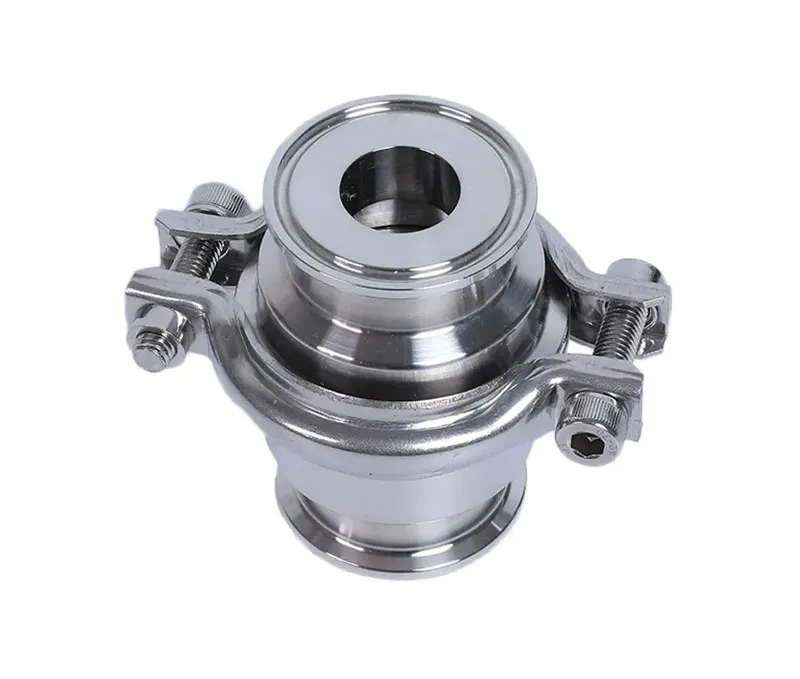
- A single-bolt clamp uses one wing nut or T-bolt, while high-pressure and heavy-duty clamps are often double-bolt designs. Double-bolt closure adds a fastener set, a longer or wider body section, and assembly time. For a constant nominal size, that is a major structural cost variable.
- Pressure capability
- The clamp body must keep the gasket compressed under both normal working pressure and transient surges. The same supplier catalog distinguishes no-pressure pipe hangers from tube brackets rated at 10 bar, so pressure class should be stated separately instead of inferred from material or size.
- Nominal size
- Aohoy clamp pages show connection sizes from 0.5 inch to 12 inches. As nominal size grows, the clamp circle, band width, and fastener length tend to grow as well. Larger diameter should not be assumed proportional to cost, but it explains part of material mass.
- Finish
- Sanitary clamp specifications often include a clean external surface that resists product build-up and allows visual inspection. Deburred edges, smooth transitions, and specified surface finishes add process steps and inspection time when a plant demands them.
- Quantity and logistics
- Setup, packaging, shipping, and traceability documents are partially fixed costs. Larger order quantities spread those fixed elements across more units and usually lower the per-unit cost. But a very large volume also locks working capital, so quantity optimization belongs in the estimation, not after it.
In the catalog used for this article, the 13MHP high pressure clamp with brass nut is listed as a 304 double-bolt heavy-duty clamp with connection sizes from 0.5 to 12 inches. It demonstrates how construction pattern and hardware material can affect the estimate even when nominal size stays the same.
Why Are Some Tri-Clamps More Expensive Than Others?
Hygienic tri-clamps differ in body construction, closure system, and finish even at equal nominal size. A single-bolt light clamp is not interchangeable with a double-bolt heavy-duty clamp, so specification changes, not brand, explain most cost differences.
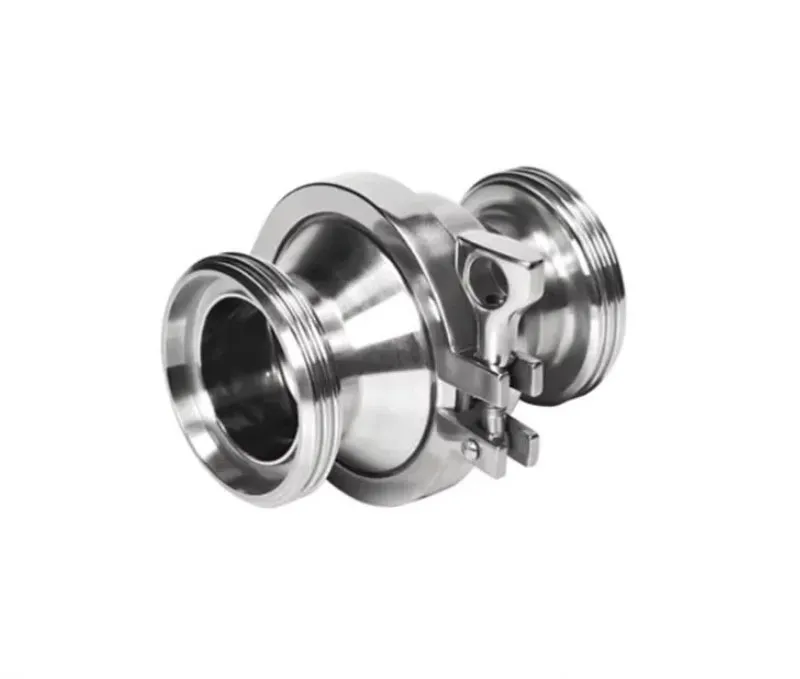
Every tri-clamp must hold two ferrules against a gasket, but the engineering path to that result differs. A single-pin clamp is a one-piece band with one wing nut. A heavy-duty version can use a wider band, a double-bolt closure, and a thicker cross-section. Multi-segment clamps add still more parts. The supplier catalog shows these patterns as separate product families, and the structural difference is what makes estimates difficult to compare by model name alone.
Look at the 13MHHS Three Pieces Clamps page as an example of a segmented clamp. A segmented body changes the component count compared with a one-piece band clamp, and that difference should be visible in any supplier specification sheet.
| Construction pattern | What the catalog shows | Why it moves cost |
|---|---|---|
| Single-pin clamp | One wing nut, 304 design, used for lighter joining and support work | Lower band and fastener mass; fewer assembly operations for the same material grade |
| Double-bolt heavy-duty clamp | Two bolts and nuts; represented by 13MHP and 13EU/13SF references | Additional fastener set, wider body, more machining and hardware content |
| Multi-segment clamp | 13MHHS is supplied as three body sections | More body sections and connecting elements make assembly and quality control more complex |
The table shows structural factors, not monetary values. Two suppliers could use the same closure pattern yet follow different inspection and quality procedures. Treat an unexplained low estimate as a review trigger, and ask for the clamp body thickness, fastener size, and closure geometry.
Material grade is also part of the cost structure. The catalog shows 304 as a common default and 316 or 316L as available options on several clamp families. Different alloy content changes the raw-material input and usually makes material a distinct cost line before machining begins.
Does a Stainless Steel Clamp with Brass Nut Cost Less Than an All-Stainless Clamp?
Not necessarily. Replacing a stainless nut with a brass one lowers stainless content in the hardware, but body material and closure design dominate clamp cost. A brass-nut high-pressure clamp may still have additional bolt and reinforcement features.
The nut material question is usually about closure hardware, not product contact. In a correctly assembled tri-clamp joint, the ferrules and gasket carry the process fluid, while the clamp body and its nut stay on the outside. A brass nut is therefore a mechanical choice, and it changes thread behavior rather than changing the seal itself.
Brass is softer than austenitic stainless steel. When a brass nut runs on a stainless bolt thread, the pair may be less prone to thread galling during repeated assembly, which is why a brass-nut closure can be attractive in a maintenance-heavy line.
Does the brass nut reduce cost enough to make the whole clamp less expensive? Not by itself. Replacing the nut material removes some stainless steel consumption from the hardware line, and brass hardware production can have a different manufacturing path than a machined stainless nut. At the same time, the clamp body, bolt count, pressure capability, and finish dominate. A high-pressure double-bolt brass-nut clamp should not be treated as a low-cost commodity simply because its nut is brass.
If the site specification requires all-stainless external components because of washdown chemistry, compatibility, or documentation, a full-stainless clamp is the safer choice. If the evaluation is only about product contact, the brass closure is outside the contact zone when installed correctly. State the hardware alloy explicitly on the engineering data sheet.
How Should a Buyer Estimate Clamp Cost for a New Hygienic Line?
Estimate starting from service pressure, ferrule outside diameter, media corrosiveness, required finish, and batch quantity. Define these before comparing supplier costs, because configuration, not model name, creates most cost variation between estimates.
The first estimation step is not arithmetic. It is writing down the service envelope: maximum working pressure, process media, cleaning chemistry, expected temperature, and connection layout. The clamp size is then taken from the ferrule outside diameter and gasket system, and the material and closure class are taken from the service envelope. Only after these items are fixed can volume and logistics be used to compare supplier proposals.
Step 1: Define the duty
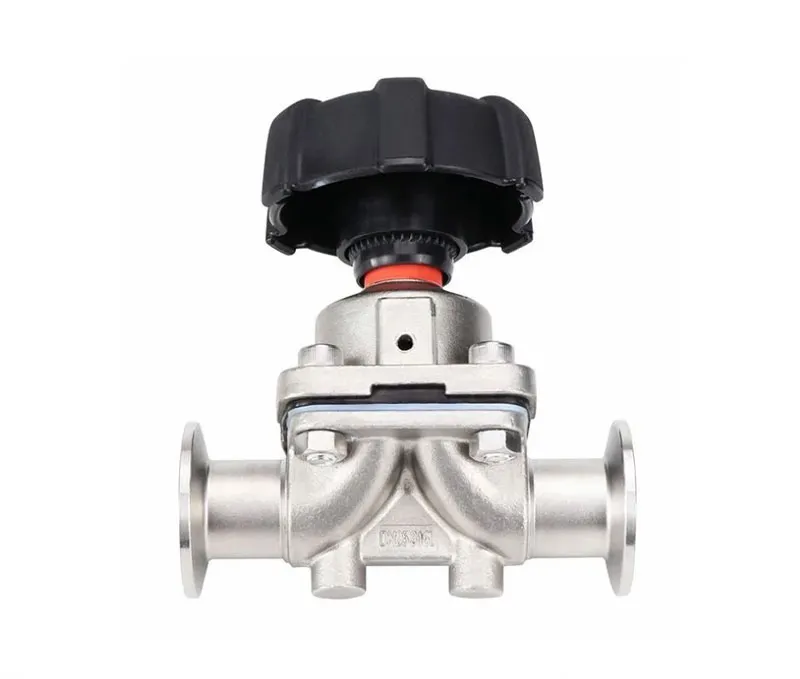
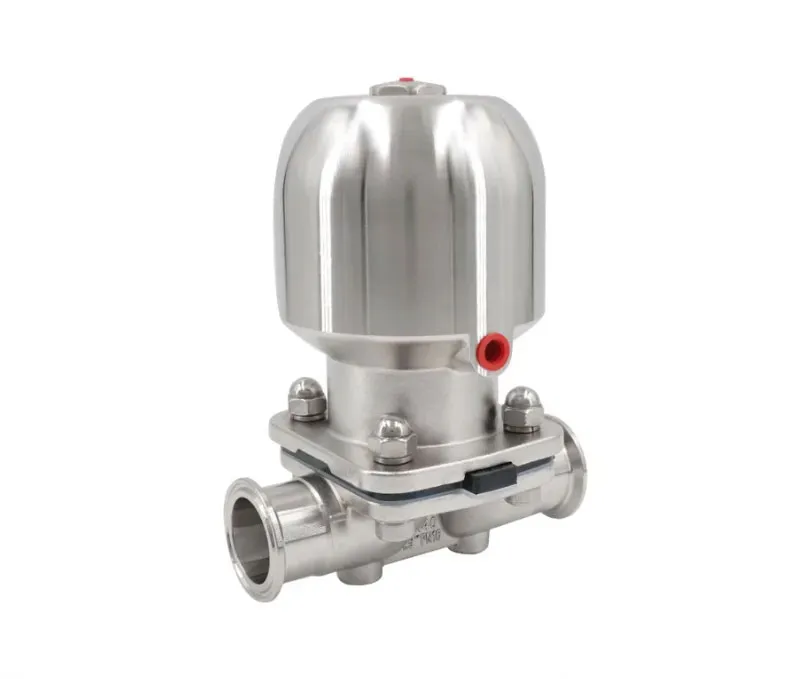
Record maximum working pressure, cleaning detergent, temperature range, and whether the clamp is installed on a straight run, tank outlet, or valve. If the clamp end is on a valve, the sanitary clamp diaphragm valve follows the same end-connection logic at its body, although the diaphragm and actuator require separate evaluation.
Step 2: Confirm clamp size from the ferrule
Measure or list the ferrule outside diameter and gasket seat profile before choosing a clamp from a catalog. Nominal catalog sizes such as 0.5 to 12 inches are useful only when they match the actual ferrule OD used on site. Include thread size for the bolt and the exact nut configuration.
Step 3: Set material and closure class
Decide between 304, 316, or 316L where the supplier supports the grade, and write down whether the design is single-bolt, double-bolt, or segmented. If the service is genuinely high pressure, do not substitute a support-only clamp for a pressure-rated clamp.
Step 4: Select finish and quality documents
Establish surface finish, thread protection, marking, and required test certificates. Specify whether the outside needs mechanical polish, whether the body finish is acceptable as cast, and what documentation must accompany each batch. These requirements become part of the cost structure.
Step 5: Build a configuration-based cost model
Compare configurations before comparing providers. A useful conceptual model is unit cost share = (material mass x alloy factor + manufacturing effort x closure complexity) / order quantity. Treat this as a reasoning aid, not as a supplier formula. When the same configuration is ordered in two lot sizes, separate the fixed setup part from the variable per-unit part in the request.
FAQ
Which clamp variable is most often missing from a request?
Nominal size and material are common, but pressure class and closure pattern are frequently omitted. Buyers should state single-bolt versus double-bolt, segmented versus one-piece, brass versus stainless hardware, and maximum working pressure. Without these fields, supplier estimates are not comparable even when the nominal size is identical.
Is a larger clamp always more expensive than a smaller one?
No. Size raises material mass, but pressure class and closure design can move the estimate more. A heavy double-bolt clamp at a small nominal size can use more material and machining content than a larger light-duty single-pin clamp, depending on catalog design. Compare rated service and body configuration, not nominal diameter alone.
Should a brass nut be used in a food plant?
A brass nut is outside the gasket seal and does not touch the process stream in a correctly installed tri-clamp joint. It can therefore be acceptable from a product-contact perspective. If external washdown chemistry attacks brass, or the plant requires a single stainless material family for documentation, specify all-stainless hardware instead.
Conclusion: Estimate by Configuration before Comparing Suppliers
High-pressure clamp cost in a hygienic line follows a set of engineering variables, not a single commodity factor. The buyer should define pressure, ferrule outside diameter, alloy, closure geometry, finish, and lot size before contacting suppliers. Use the source catalog only as a structural reference; the values of the variables must be determined by process requirements and site material strategy. With that preparation, configuration-based estimation becomes repeatable and less dependent on guesses.