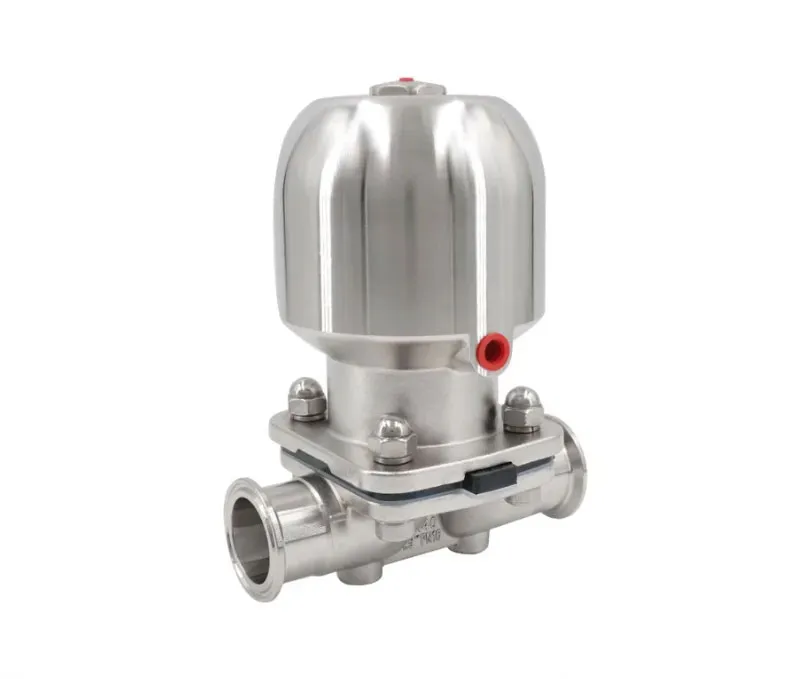

Article Overview: This comparison helps technical buyers evaluate Tri-Clamp versus welded connections for hygienic piping. It compares contact surfaces, disassembly, CIP/SIP behavior, pressure limits, and leak risk using available component documentation as the evidence boundary. The decision logic favors a hybrid specification in most process plants.
Which is better for sanitary lines, tri-clamp or welded fittings?
Neither connection is universally better: tri-clamp excels when components need routine removal or process flexibility, while welded joints provide a crevice-free permanent joint at the expense of dismantling. The correct answer depends on line duty, cleaning protocol, and access requirements.
Both connection families operate in food, beverage, brewing, and pharmaceutical lines, and both rely on sanitary stainless steel, usually 304 or 316L. The practical difference is not simply hygienic versus non-hygienic; it is the trade-off between serviceability and a permanent, low-profile joint. Procurement teams should compare concrete dimensions before selecting either approach.
Contact surface comparison
Welded joints have a continuous bore with no mechanical interface, while a tri-clamp connection introduces a gasket at the joint face. The gasket can be specified in EPDM, silicone, or other compounds; the contact surface is the inner bore of the ferrule and the gasket inner diameter. Because clamp connections require ferrule ends welded to tube, weld quality still matters. A poor weld traps bacteria; a well-made weld plus a correctly seated gasket is what makes either design cleanable.
Disassembly and process flexibility
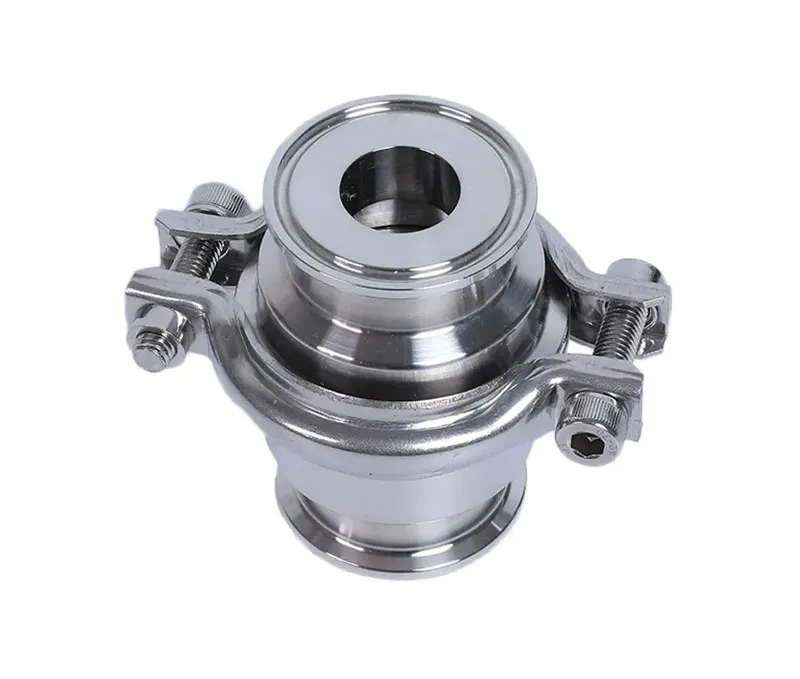
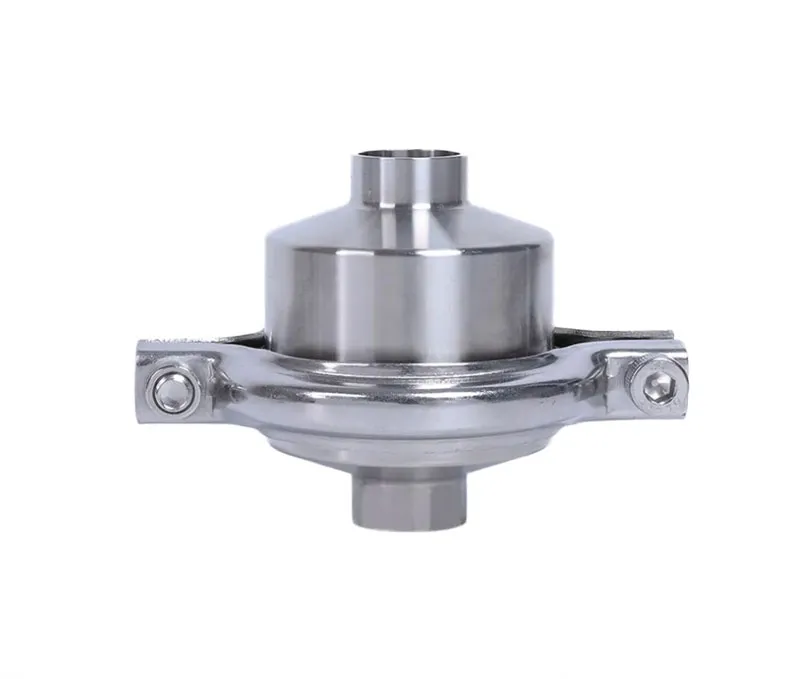
A tri-clamp connection is opened with a wing nut or bolted clamp, allowing inline instruments, pumps, valves, or spool pieces to be swapped without cutting pipe. A heavy duty double pin clamp for high retention force illustrates how a mechanical clamp design can serve lines that need repeated opening yet still demand firm clamping. Welded lines require cutting and rewelding for any modification, so they fit permanent routing with low expected change frequency. For process development or multi-purpose skids, the clamp connection is usually the practical choice.
Pressure and mechanical limits
The mechanical limit of a tri-clamp is not a single number; it depends on tube wall, ferrule style, clamp design, gasket material, and size. A dedicated high-pressure clamp is specified for heavier duty service, while standard single-pin clamps service ordinary low-pressure lines. Welded joints, by comparison, have no clamp or gasket to limit pressure, but they still depend on proper weld penetration and joint design. When line pressure exceeds the rating of an available clamp or gasket, a weld joint becomes the safer option, or the engineer should select a clamp explicitly rated for that service.
Cleaning in place and sterilization
Both connection types appear in CIP and SIP lines, but validation responsibilities differ. A tri-clamp joint adds a gasket that can be inspected when the clamp is opened; the gasket must be compatible with cleaning agents and process temperature. A welded joint avoids gasket maintenance but transfers the risk to weld quality and internal finish. For product-contact zones where the line will not be opened, welded pipe removes one variable from the cleaning validation.
What components make a tri-clamp connection?
A tri-clamp connection has three functional parts: two ferrules welded or fitted to tube ends, a gasket compressed between them, and an outer clamp that pulls the ferrules together. The clamp style, size, material, and tightening method determine the joint integrity.
The ferrule provides the weld end or tube end, the gasket creates the seal, and the clamp supplies the mechanical retention force. Selection should be based on the process fluid, pressure, temperature, and frequency of disassembly. The clamp must also match the ferrule end-connection standard used in your line, so verify compatibility before purchase.
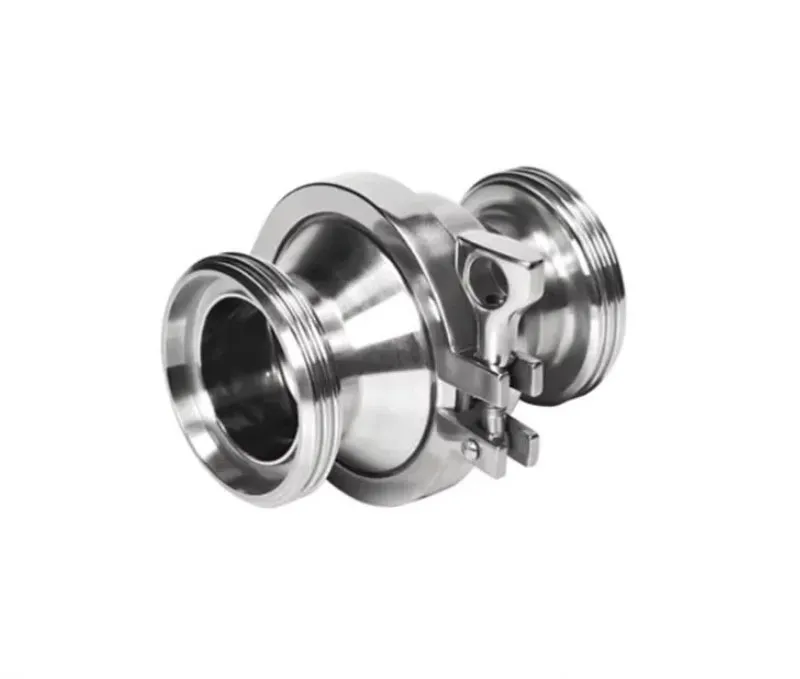
Because the clamp is the only active component, its material and style deserve the most attention. A high-pressure clamp with brass nut is specified when the process requires additional tightening force and higher pressure ratings. A clamp with a brass nut can draw the ferrules together more firmly than a standard wing-nut clamp, but tightening must still follow the manufacturer guidance to avoid gasket damage or clamp over-stress.
Engineers should verify that the clamp selected for a given size has enough clearance for the ferrule outside diameter and that the gasket compound is compatible with the process temperature. The clamp is not a pressure vessel; the gasket and the ferrule surface finish work together to contain the process fluid.
Do tri-clamp fittings leak more than welded pipe?
Tri-clamp fittings are not inherently leak-prone, but they add a gasket that must be compressed correctly, while a welded joint has no mechanical interface. Leak risk comes from wrong gasket size, uneven tightening, incompatible material, or damaged ferrule faces.
The sealing principle is gasket deformation under clamp load. When the clamp tightens, the gasket compresses between the two polished ferrule faces and forms a static seal. Supplier guidance for wing-nut clamps recommends tightening until snug and then adding one half twist; over-tightening can damage the gasket or the clamp, while under-tightening leaves a path for leakage or contamination ingress.
Why a tri-clamp connection may leak
- Gasket not centered between ferrules before tightening.
- Inconsistent torque on bolted clamps or uneven wing-nut force.
- Ferrule faces with scratches, pits, or poor surface finish.
- Gasket compound incompatible with the process fluid, causing swelling or hardening.
- Clamp size mismatch or worn clamp threads.
Welded-line leaks usually reflect fabrication quality rather than a mechanical interface. Typical causes include incomplete weld penetration, porosity, oxide discoloration at the weld root, or thermal distortion that leaves an internal step. Both connection types require leak testing during commissioning: welded lines focus on weld integrity, while clamp lines should be tested with the gasket installed and the clamp tightened to specification.
Dedicated high-pressure clamp designs are available for heavier services, which reinforces that clamping design and assembly quality have more effect on leakage than the tri-clamp concept itself.
When can a tri-clamp connection replace a welded joint in hygienic piping?
A tri-clamp connection can replace a welded joint when the service pressure stays within the clamp and gasket rating, the ferrule and gasket materials suit the process chemistry, surface finish meets hygiene requirements, and the line needs routine disassembly. It is not a universal substitute.
Replacement decisions are common in process development, pilot plants, multi-product lines, and any installation where instruments, valves, or spool pieces must be removed for calibration or service. The following flow summarizes a defensible evaluation procedure.
Step 1: Define the operating zone
Document the maximum pressure, operating temperature, fluid type, and cleaning regime. This step tells you whether a clamp and gasket can exist in the service at all.
Step 2: Verify component rating
Check the selected clamp and gasket rating, size range, and material against your operating pressure and temperature. Confirm that a clamp product exists for your pipe size before designing the joint into the line.
Step 3: Validate cleaning access
Determine whether the joint is in a product-contact zone that must be disassembled for manual cleaning. If the line can be validated with clean-in-place methods without opening, a welded connection remains viable.
Step 4: Confirm surface finish and gasket compatibility
Specify the ferrule surface finish and choose a gasket compound compatible with the process temperature and cleaning agents.
Step 5: Prototype and test
Install a sample joint and test it under operating pressure and cleaning conditions. Repeated clamp open-close cycles should not degrade the gasket or ferrule face.
This evaluation logic works for the small and medium line sizes covered by the component data; the available sanitary clamp sizes range from 0.5 to 12 inches. The first screen should confirm that the required pipe size falls within the product range. A tri-clamp is not a substitute for a pressure-bearing weld in high-pressure or high-temperature services unless the clamp and gasket have been specifically validated for that duty.
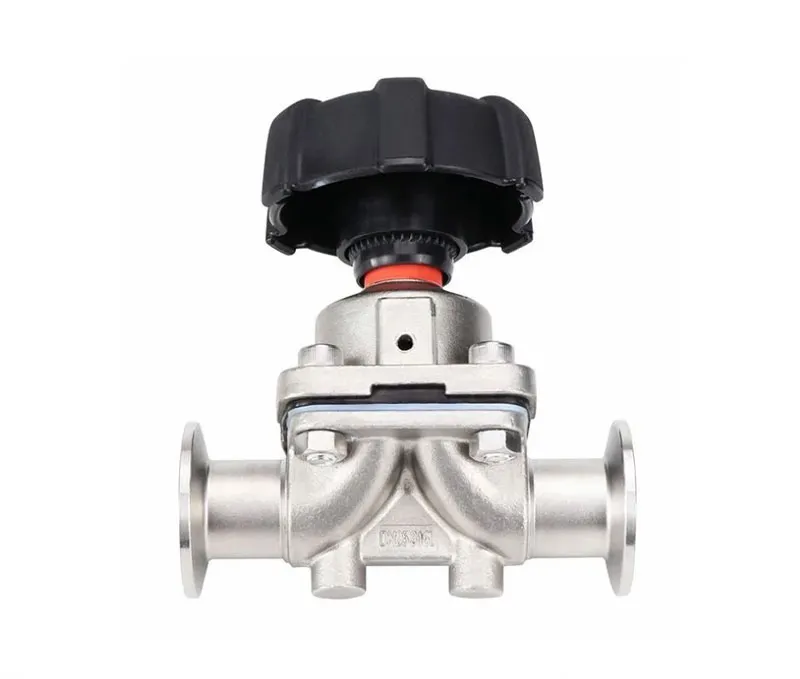
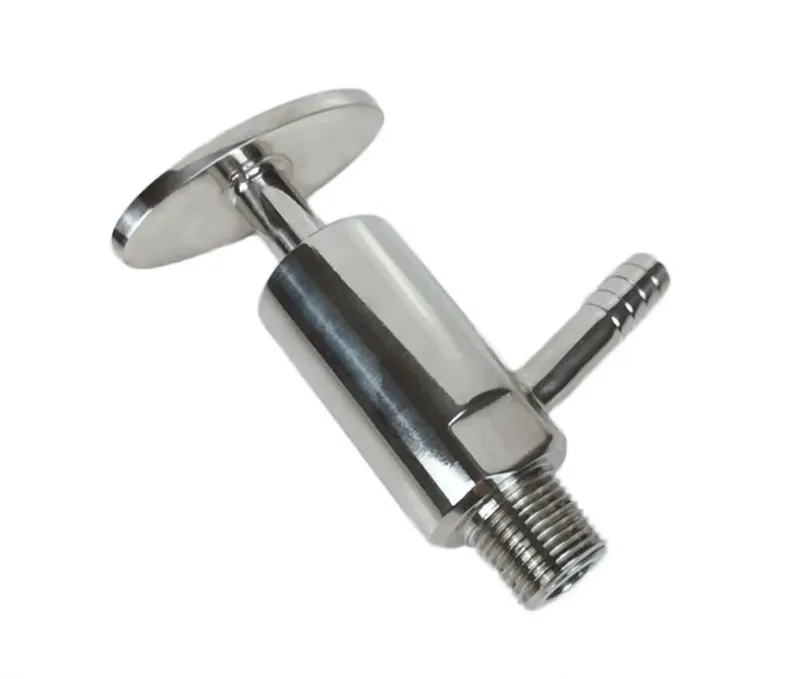
For a line that will need frequent access, teams often find it practical to integrate tri-clamps around valves and instruments while keeping long straight pipe runs welded. This hybrid approach reduces the number of gaskets while preserving the ability to isolate equipment. For example, a Sanitary Tri Clamp Sample Valve is a component family that depends on clamp connections for removal and cleaning, demonstrating why clamp joints remain necessary in modern sanitary lines.
Comparison-driven specification: where to use each connection
Use the decision table as a starting point; your line conditions should always drive the final specification. This comparison covers joint behavior, not component-level engineering calculations.
Key specification comparison
| Criterion | Tri-Clamp | Welded |
|---|---|---|
| Contact surface | Ferrule faces with a gasket between them | Continuous bore without mechanical interface |
| Disassembly | Routine disassembly with standard tools | Cutting and rewelding required |
| CIP/SIP cleaning | Cleanable when gasket and torque are correct | Cleanable when weld quality and finish are correct |
| Pressure limit | Depends on clamp, ferrule, size, and gasket rating | Depends on wall thickness and weld joint design |
| Leak risk control | Gasket condition and clamp torque | Weld quality and inspection |
| Typical fit | Frequent access, instruments, multi-product lines | Permanent, high-integrity distribution lines |
Procurement decision card
Choose tri-clamp when: the line must open regularly, process changes require moving components, or cleaning validation benefits from visual inspection of joint faces. Confirm that the clamp style supplies the retention force your pressure and temperature require, and select a compatible gasket. For a high-pressure line, a High-pressure tri-clamp with brass nut for sanitary pipelines is an option to evaluate when additional tightening force is needed.
Choose welded when: the line is a permanent utility or product distribution loop with no planned disassembly, the service is outside the available clamp rating and size range, or the process has zero tolerance for gasket-related contamination and you can control weld quality through inspection.
Buyer note: Purchasing a clamp as an afterthought is a common sourcing risk. If you standardize a section on tri-clamp connections, select the clamp and gasket as deliberately as the pipe material. Compare clamp retention geometry and intended service class against the heavy-duty double-pin design where beam strength is your primary concern.
Process engineers sometimes ask whether a clamp joint weakens a line. The clamp does not add strength to the pipe; it holds the connection together. Pipe strength still comes from the tube wall and the weld quality of the ferrules. The clamp contributes retention force, which is why clamp geometry and torque matter. Too little force can allow the joint to open under pressure; too much force can damage the clamp or gasket.
FAQ
Can tri-clamp connections be used for high-pressure sanitary lines?
Yes, when the clamp, ferrule, gasket, and size are rated for the service. Supplier documentation lists dedicated high-pressure tri-clamps in stainless steel, often with a brass nut, and other clamp products cite limits such as 10 bar for certain hanger designs. Verify the rating for your exact combination rather than assuming a standard clamp suits high-pressure duty.
What gasket materials work in hygienic tri-clamp service?
Supplier documentation mentions silicone and EPDM among gasket-related options, with temperature limits cited as about 180°C for silicone and 150°C for EPDM on related products. The gasket compound must also resist the process chemistry and cleaning agents. Match the gasket inner diameter to the ferrule inner diameter to avoid hold-up or crevices.
Is a welded line always more hygienic than a tri-clamp line?
No. Weld quality determines the hygiene of a welded line, while gasket condition, clamp torque, and surface finish determine the hygiene of a tri-clamp line. A poor weld can become a contamination point; a properly assembled tri-clamp with a compatible gasket can meet hygienic requirements under suitable cleaning validation.
Conclusion: build the decision around access, pressure, and cleanliness validation
Tri-clamp and welded connections are both legitimate in hygienic piping; the right choice depends on the operating profile. Use tri-clamp where disassembly, process flexibility, or component replacement is expected, and choose welded joints for permanent runs where a gasket-free bore is preferred.
The evaluation should start with the service envelope and then verify that the available clamp range, gasket material, and clamp retention design match the process. Welded lines should be considered when gasket elimination outweighs the need for future access. For many plants, a hybrid layout is the most defensible design because it lets each line segment use the joint type that fits its function.
The reference data in this article comes from supplier product documentation and is intended as a decision framework, not as a substitute for engineering calculations or pressure testing.