
Article Overview: For procurement managers, sourcing teams, and project engineers evaluating a stainless steel pipe hanger clamp for hygienic process lines, this guide explains its mechanical support function, gives spacing criteria, compares standard and heavy-duty designs, and defines what to verify before RFQ. The article is based on the supplier's published product information for this stainless steel support range and does not replace piping stress or structural vibration analysis.
What is the function of a stainless steel pipe hanger clamp in hygienic process piping?
A stainless steel pipe hanger clamp secures hygienic tubing to a support structure so line weight and service movement are not transferred into ferrule joints, gaskets, or valve bodies. It is a mechanical support component, not a pressure-retaining clamp.
This distinction should guide the RFQ. The supplier's product information classifies the component as a clamp for pipe, lists connection sizes from 0.5 inch to 12 inches, and states a maximum pressure of no pressure. That means the relevant engineering checks are tube outside diameter, wall thickness, support spacing, mounting type, surface finish, and material specification, rather than a pressure rating.
Support is not a sealing function. The hanger holds the line in position so dead weight and service forces do not bend the tube at a ferrule or pull on a gasket. Sanitary gaskets are designed to seal, not to carry the weight of an unsupported pipe run. When supports are omitted or too far apart, the resulting sag can look like a gasket leak and lead a maintenance team to replace an undamaged seal.
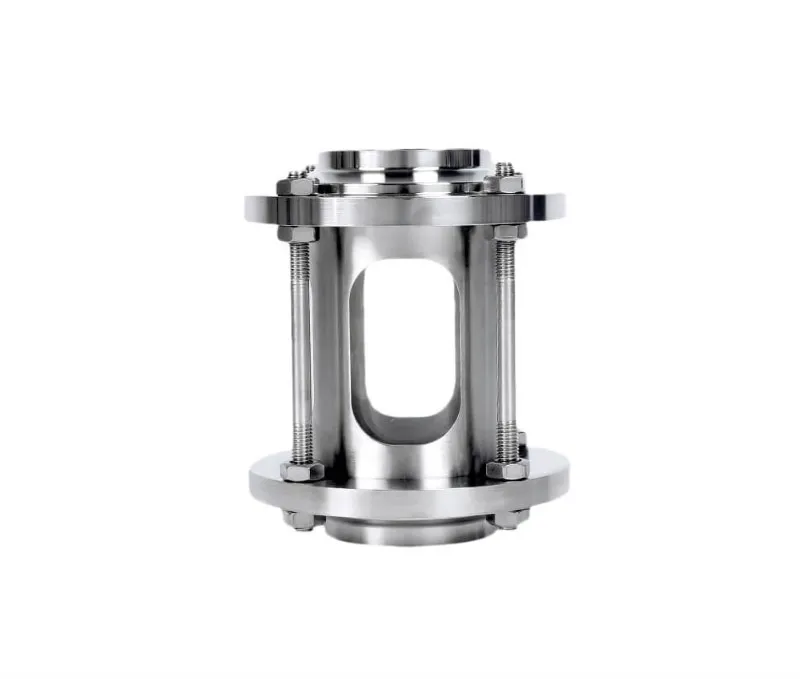
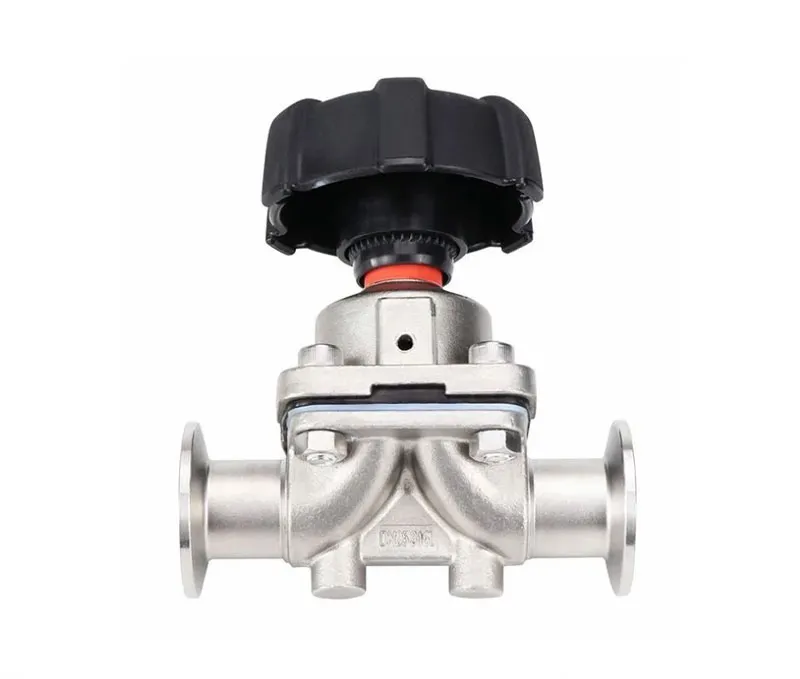
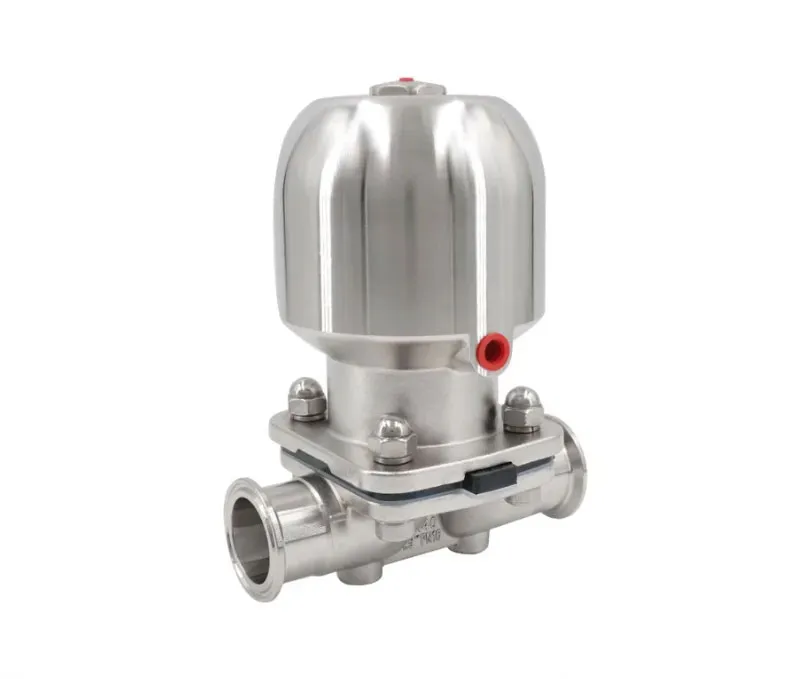
Support positions also have to respect maintenance access. A process component such as a sanitary clamp diaphragm valve must be opened or removed for inspection, and the nearest pipe hanger should not block access to the clamp. The line layout should define these clearance requirements before quoting.
In the technical inquiry, describe the requirement as line support, not pressure containment. That wording prevents the supplier from offering a different pressure-rated product and prevents the inspection team from applying pressure-fitting acceptance criteria to a support accessory.
How far apart should pipe hanger clamps be in sanitary lines?
Support spacing should be based on tube outside diameter, wall thickness, fluid load, and acceptable sag, with closer supports near concentrated loads. No single spacing value can be applied to every sanitary line.
Larger and heavier-wall tubes are stiffer and can usually be supported at wider intervals, while small-diameter thin-wall tubes need closer spacing to prevent sag and ferrule stress. The published product range for this hanger family runs from 0.5 inch to 12 inches, but it does not include a spacing table. Spacing is a piping-design decision and should be written into the RFQ as a maximum support interval.
The main spacing inputs are the tube's outside diameter and wall thickness, the density of the fluid, the process temperature, and the presence of concentrated loads such as valves, sample points, sight glasses, and instruments. Each concentrated load should have a support close to it rather than relying on the adjacent span.
If a procurement team needs a number for quotation comparison, a conservative conversational baseline is about 1.5 to 2 meters for small-diameter thin-wall tube. That value is only a hypothetical RFQ baseline, not a supplier recommendation or a design rule; the piping engineer must confirm the final span.
Thermal movement also matters. A clamp that grips the tube can act as a restraint, so the design should state which supports are fixed and which allow axial movement. If rotating equipment or pressure pulsation is present, spacing alone is not enough; request a separate mechanical or piping stress review before finalizing the order.
How do you select between a heavy-duty tube bracket and a standard pipe hanger clamp?
Select a standard pipe hanger clamp for routine support of sanitary tube within its published sizes; choose a heavy-duty tube bracket hanger when the design requires a pressure-capable bracket or a heavier support structure.
The two product groups are easy to confuse because both are stainless steel pipe supports. Comparing their catalog positions clarifies the difference.
Standard sanitary pipe hanger clamp
- Published connection size range: 0.5 inch to 12 inches
- Material options: stainless steel 304 or 316
- Connection type: clamp for pipe
- Published maximum pressure: no pressure
- Use as a support-only component for hygienic line
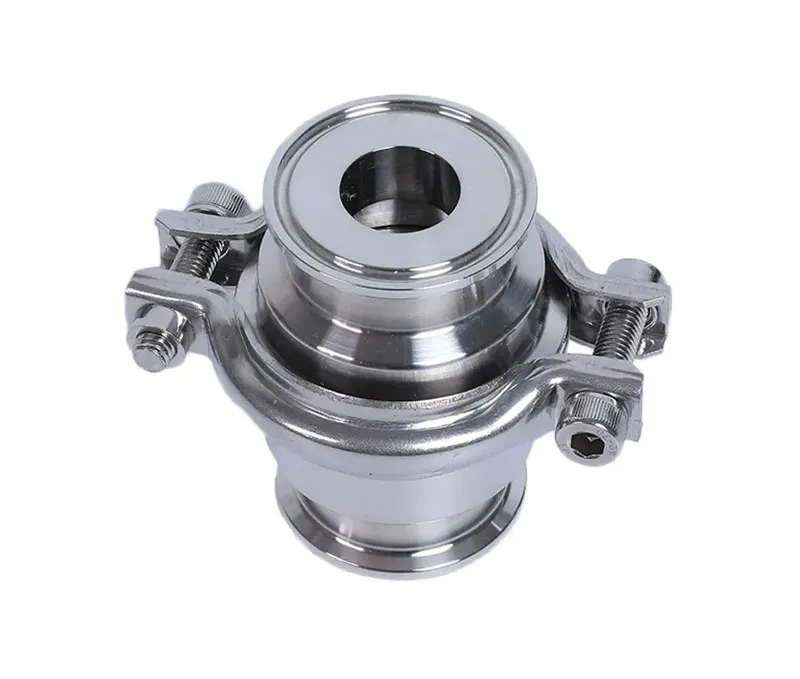
Heavy-duty tube bracket hanger
- Published connection size range: 0.5 inch to 6 inches, or 15A to 100A
- Material: precision-cast stainless steel 304; 316 is also available
- Connection type: tri-clamp type
- Published maximum pressure: 10 bar, or 145 psi
- Use when the line design requires a pressure-capable bracket or higher mechanical support
The supplier offers a heavier configuration described as the heavy duty tube bracket hanger for larger loads, but its published connection range stops at 6 inches. That means a larger-diameter line may still require a standard pipe hanger clamp as support-only hardware unless a different heavy support is specified.
Selection should be based on the documented engineering requirement rather than appearance. If the function is simply to hold a small-bore thin-wall line in place, the standard clamp is the direct fit. If the bracket is part of or attached to a pressure-capable connection, or if the support point must handle higher mechanical load, the heavy-duty version is the more appropriate starting point.
In the RFQ, state whether the role is support only or pressure-capable. Then ask the supplier to confirm the actual tube outside diameter, the connection type, the available alloy, the hanger style, and the mounting arrangement. Do not infer load capacity from the visual similarity of the two products.
What should procurement verify before sending a pipe hanger clamp RFQ?
Before sending a pipe hanger clamp RFQ, define tube outside diameter and wall, material grade, finish, support interval, hanger style, mounting method, documentation, and an agreed quantity-adjustment rule.
When these fields are missing, supplier responses cannot be compared fairly. Build one RFQ template for every line size and require each supplier to complete the same data fields.
Step 1: Define service conditions
Record the tube outside diameter, wall thickness, process fluid, temperature range, and washdown environment for each line size.
Step 2: Set support spacing and point loads
State the maximum support interval in the RFQ and list valves, sample points, instruments, and direction changes that require a nearby clamp.
Step 3: Choose the support family
Use the comparison criteria above to classify each location as support-only or pressure-capable before requesting a quote.
Step 4: Specify material and documentation
State whether 304 or 316 is required, define the acceptable surface finish, and list the certificates and inspection records needed for acceptance.
Step 5: Define quantity and packaging rules
Agree on a quantity-adjustment clause for installation variation and state the packaging requirements for a hygienic site.
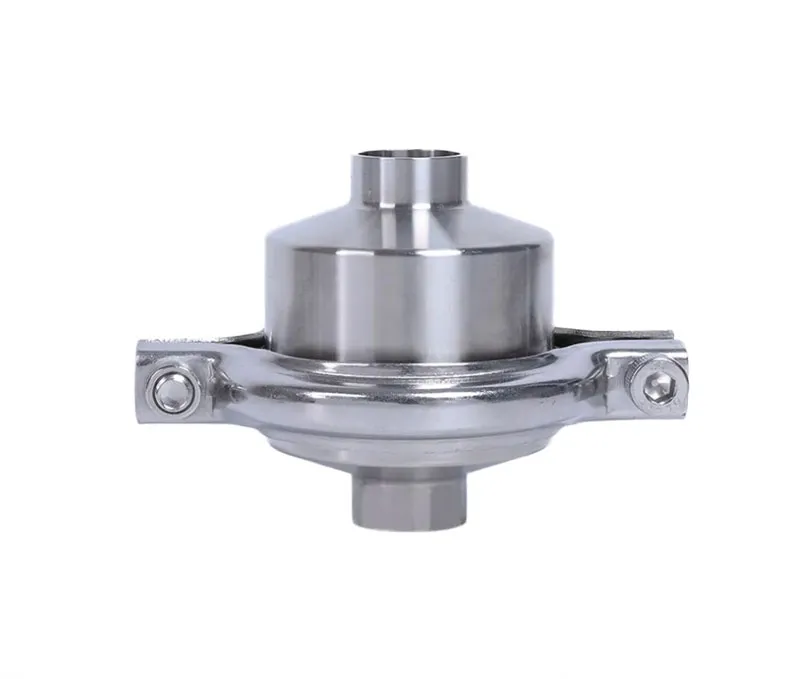
For a support-only line, include a line item for the published stainless steel pipe hanger clamp for sanitary pipe support so the quote is tied to a defined product and not a generic description. If the supplier cannot map the response to that product description, ask for a technical clarification before comparing prices.
The final pre-order review should confirm that every support location has a defined clamp size, that concentrated loads are covered, that material certificates are included, and that the installation contractor has a documented basis for adding intermediate supports if the isometric changes.
FAQ
Is a pipe hanger clamp rated for pressure?
The published specification for the stainless steel pipe hanger clamp says that its maximum pressure is no pressure, which identifies it as a support component rather than a pressure-retaining fitting. The heavy-duty tube bracket hanger has a published maximum pressure of 10 bar, or 145 psi. Always confirm the rating before using a support bracket near a pressure boundary.
Can one pipe hanger clamp support multiple tube sizes?
No. Although the product family ranges from 0.5 inch to 12 inches, each clamp is matched to a specific tube outside diameter. Select the clamp by the measured tube OD and confirm the connection type and hanger style in the RFQ. Do not rely on nominal pipe schedule alone.
How should quantity uncertainty be handled in the RFQ?
Include a quantity-adjustment clause in the RFQ and purchase order. As-built isometrics often require extra intermediate supports near valves and instruments, so define whether the final count can be adjusted and when the supplier needs that confirmation. This prevents project delays while keeping the purchase order manageable.
Conclusion and pre-purchase checklist
A sanitary pipe hanger clamp is a support component that protects ferrules, gaskets, and valve connections from line weight and misalignment. It is not a sealing device and should not be treated as a pressure-retaining fitting.
Before releasing a purchase order, confirm the function of each support, verify tube outside diameter against clamp size, select the correct standard or heavy-duty configuration, and make supporting material documentation part of the supplier evaluation. If these details are established before the RFQ, the final comparison becomes an objective review of dimensions, material, and documentation.